Louisa May Alcott: The Woman Behind Little Women by Harriet ReisenMy rating: 5 of 5 stars
If American Bloomsbury was the appetizer, then this book is the meal. Louisa May Alcott's father, Bronson Alcott, was a true American original: a deplorably-bad writer and a sensational orator who travelled the country speaking about Transcendentalism in-between living in disastrous utopian communities that were based more on philosophy than the mere, mortal details of farming and human nature.Louisa's life flowed from that childhood, both the joyous (loving Henry David Thoreau) and the horrific (near-starvation and grisly poverty). Her talent for writing potboilers saved her and her family from the ruinous debts that had been incurred by Bronson's inability to provide for his family. However, not until she acceded to her family and editor's desire for her to write for children did she find the voice that would bring her unimaginable wealth and fame.Harriet Riesen's book is nicely done - factual without droning, and admiring without doting. I greatly enjoyed the details of Louisa's trips overseas, partly because the writing is so wonderful, and partly because (warning: subjectivity ahead) it made me happy to know that Louisa had been happy.(Note to Riesen's editor: Daisy and Demi were Meg's children, not Jo's. Ah well.)(Note to self: next time, don't be so hasty to judge a book....)
 American Bloomsbury: Louisa May Alcott, Ralph Waldo Emerson, Margaret Fuller, Nathaniel Hawthorne, and Henry David Thoreau: Their Lives, Their Loves, Their Work by Susan Cheever
My rating: 4 of 5 starsThe word "Bloomsbury" conjures a time and place peopled by artistic visionaries whose creativity changed the perception and practice of art, literature, philosophy, and criticism. I think of it as a wheel that radiated outward from Virginia Woolf to Lytton Strachey, Carrington, Roger Fry, Vanessa Bell, Lady Ottoline, Vita Sackville-West, Katherine Mansfield, Ethyl Smith - clearly, not all Bloomsberries, but artists who were reaching out and breaking barriers everywhere. These people (especially VW!) were great gossips, and they had plenty to gossip about. Everyone seemed to be sleeping with everybody else, in and around Garsington, and feuding with someone over something, or pretending to be the father of someone else's child... All manners of sexual expression were the norm (as it should be). This was a vibrant, exuberant, iconoclastic bunch of people, and I wish I could have been there, just to listen and pour the tea.Ms. Cheever wants to makes the case for Concord as an American Bloomsbury because of the writers who lived in, or passed through the area. Ralph Waldo Emerson desired a creative community, and his influence drew some literati, either for love or for money. (Often, for Emerson's own money!)Some passed through on their ways to or from one failed utopian community or another. Two of these, Brook Farm and Fruitlands, were the inspiration for Nathaniel Hawthorne's Blythedale Romance. Amos Bronson Alcott (father of Louisa May, brilliant and inscrutable educator, and abysmal provider for his family) showed up after one well-meaning failure or another. He visited (unnamed) Henry David Thoreau's Walden, and made an appearance in Louisa May Alcott's [Little Women:] as the usually) absent Mr March. (William Ellery Channing described him as "Orpheus at the plough.")Only one woman was and intellectual brilliant enough, to fit into this community: the doomed Margaret Fuller: intellectual, vigorous, and devastating to many a married couple's domestic bliss. Not a single Transcendentalist male seemed to be able to resist her charms, whether by lusting in his heart or in a more appropriate region of his body. (They disappointed her, however. As she wrote in her journal, "Waldo was here three times yesterday, and sang his song... on his lips is the perfumed honey of Hymettus, but we can only sip.") Hawthorne, described by Ms. Cheever as "a rat with women," was more openly besotted than any other. He used her as the inspiration for the character Zenobia in The Blithedale Romance. She also may have inspired The Scarlet Letter's Hester. As Ms. Cheever writes, Fuller was "a Dorothy Parker woman in a Jane Austen world."The writers of Concord were good for gossip, and loved to gossip as much as any of the Bloomsbury crowd. Since the Transcendentalist philosophy was born and developed there, Emerson's Concord did create something new and powerful, even though there was no moment when the world changed (as it purportedly did when Lytton Strachey pointed at a stain on Vanessa Bell's clothes and said, "semen?") Some have followed Thoreau's lead by going on their own into the woods, to meld philosophy and science.Emerson's essays are masterpieces of philosophy and graceful writing. Hawthorne's novels are (rightly) studied in nearly every school in America. Ms. Cheever writes, "people of the time still believed that at the north and south poles the globe was indented with a tropical paradise... Another of the exotic beliefs of the age was that women were inferior to men," and they could not change the mores of their time. How could they, when people still believed these fantasies? (I enjoy imagining Bronson Alcott, for example discussing gardening with Vita Sackville-West, or art with Virginia Woolf, but in reality, both groups were products of their times, and most likely would have bewildered each other.)And what of Louisa May Alcott, whose Little Women may be one of the most beloved books ever written? She played with Thoreau, moved back and forth between Boston and Concord, Fruitlands and borrowed houses, for most of her childhood, and never had sufficient food or security because her father never earned a living. She was too young to play a role in developing new philosophies. We are lucky: her hard life never stifled her love of words and writing, so she was able to earn a living writing potboilers under pseudonyms. But she never would have written Little Women had it not been for her parents' urging for her to write "a girl's book." In my mind, Louisa May Alcott is the best ambassador between Concord and the present - quite an accomplishment for anyone, man or woman.If you are looking for a detailed critique of Transcendentalism, or in-depth biographies, look elsewhere. American Bloomsbury is a gossipy romp and chronology of a time and place where a group of fascinating and intellectually-fearless men advanced the American spirit. View all my reviews >>
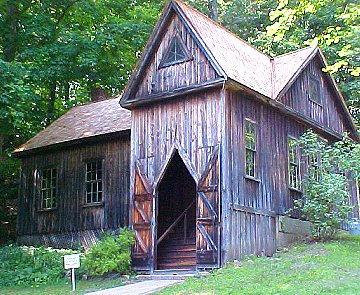
Did you enjoy New Year's Eve? My husband and I went out for an early dinner, watched some of a "Twilight Zone" marathon, and ate a truly ridiculous amount of chocolate, including truffles from "See's" that would beat anything Godiva could throw at them, no question. The last week of December was unusual because it offered two amazing television programs about two amazing women who were - at least on the surface, quite different. I wonder, though, whether they would have liked each other for their boldness, their resourcefulness, and their practicality. Both women worked to support families. The Alcotts needed support because Amos Bronson Alcott was brilliant, but unable to hold a job. Patti Smith had children to support when her husband died. Sometimes, necessity can be a powerful muse.The American Masters program, Lousia May Alcott: The Woman Behind Little Women, was too short. I wanted more - more Louisa, of course, but also more Amos Bronson and more Abigail. He has always fascinated me because he was known for his brilliant and iconoclastic speeches and innovations, but he was unable to write a coherent paragraph. (He was, however, able to design and the building that housed meetings of the Transcendentalists. Look at that photo and tell me you don't feel drawn to its whimsy!) Abigail has always fascinated me because she did not hold him back from his experiments or object to his passion for philosophy and innovation, despite the practical hardships and chaos the family endured.I have not read the biography that the program was based on (nor the collection of her journals, alas), so it shall be the first book I'll add to this year's TBR list. (Last year's list was huge. I managed to whittle it up tenfold.)
And then, there was Patti Smith: Dream of Life. I have written about Patti Smith before, but I don't think I ever could capture my passion for the woman. This film, a type of cinema verite, follows Patti Smith through ten years, countless flashbacks, interviews, and snippets of performances.
Throughout the film, she takes photographs using an old Polaroid camera. Isn't that a perfect metaphor for artistry? She looks at an object, a scene, a peron, photographs what anyone else would see, and then peels that objective reality away, leaving a blank space for her own vision.The film got, shall we say, mixed reviews, but Andrew O'hehir from Salon got it right:- One of the greatest things that can be said about Patti Smith, I think, is that although she was either an inventor or a precursor of punk (depending on how you look at it), it rapidly bored her and she moved on. She couldn't be contained by any movement or ethos or ism, and anyway was always closer to being Rimbaud or Ginsberg than to being Billy Idol (or, for that matter, Joan Jett), and by the early '80s she was married and living in suburban Detroit. Her great triumph was not that she was a female rock revolutionary, or that she left music for a domestic life, or that she came back to it when that domestic life ended. It was that she never questioned her right to live her life exactly as she saw fit, to make it up as she went along in the great tradition of all those dead white male artists she worshiped. As Sebring's film makes clear, she's still doing that today.